Uli Palli

Best Practices for Implementing Deep Learning for Quality Inspection

TL;DR: Deep learning for Quality Inspection helps manufacturers move beyond brittle, hand-coded computer vision, especially when defects and environments are highly variable. This article explains where traditional methods still shine, when deep learning is the better choice, and how Accella’s five-step, anomaly-first training process delivers fast deployment, high accuracy, and robust defect categorization even at […]

Best Practices for Implementing Deep Learning for Quality Inspection Read More »

Inspection as sensor - Industrial camera above a moving belt with identical parts; blurred background shows control room glass or monitors

Inspection as Sensor in Manufacturing: How AI Visual Inspection Supports Inline Quality Control

TL;DR Most factories still treat inspection as a simple pass/fail gate at the end of the line, which limits its value to catching bad parts after they are already made. With AI visual inspection, every part can become a data point that acts like a sensor reading: defects are classified, time-stamped, and linked to machines,

Inspection as Sensor in Manufacturing: How AI Visual Inspection Supports Inline Quality Control Read More »

J-curve in manufacturing

The J-Curve in Manufacturing and what It Means for AI Implementations

TL;DR: The J-curve in manufacturing describes a normal pattern when new technology hits the shop floor: a short dip in productivity and profitability as hardware is tuned, systems are integrated, and people and processes adapt, followed by sustained gains. Recent research, including a 2025 U.S. Census Bureau study, confirms this “J-curve-shaped” return for industrial AI,

The J-Curve in Manufacturing and what It Means for AI Implementations Read More »

environmental challenges on the shop floor

Dust, Shadows, Glare, Reflections, Vibrations – Do Environmental Conditions on the Shop Floor Hamper AI-Based Visual Inspection?

TL;DR: Dust, shadows, glare, reflections and vibrations are real – but solvable – environmental conditions on the shop floor. In production environments we protect lenses, add the right lights, and match camera/lens to the job. Reflections on glossy parts are the hardest nut to crack; they usually need a custom, multi-angle lighting setup. With sound

Dust, Shadows, Glare, Reflections, Vibrations – Do Environmental Conditions on the Shop Floor Hamper AI-Based Visual Inspection? Read More »

Glowing light buld symoblzing 6 lessons for smart factory success

6 Lessons from Leading Manufacturers on Smart Factory Success

TL;DR: The smart-factory leaders aren’t “buying more tech”; they’re nailing six unglamorous fundamentals: clean, unified data, open platforms, frontline buy-in; strategy before tools, and security/governance baked in. This quick read distills what actually scales beyond pilots and why these basics separate momentum from a stalled pilot.  If you are weighing whether AI is still a

6 Lessons from Leading Manufacturers on Smart Factory Success Read More »

Visual Inspection vs Predictive Maintenance Data Needs - comp[arison table

Visual Inspection vs Predictive Maintenance: Data Needs and Characteristics

In manufacturing, not all data is created equal. This one-slide summary compares the data needs and limitations of visual inspection vs predictive maintenance. Understanding these differences is key to choosing the right AI approach — and setting realistic expectations. Download or view the slide to see where your data stands.   Let us know if

Visual Inspection vs Predictive Maintenance: Data Needs and Characteristics Read More »

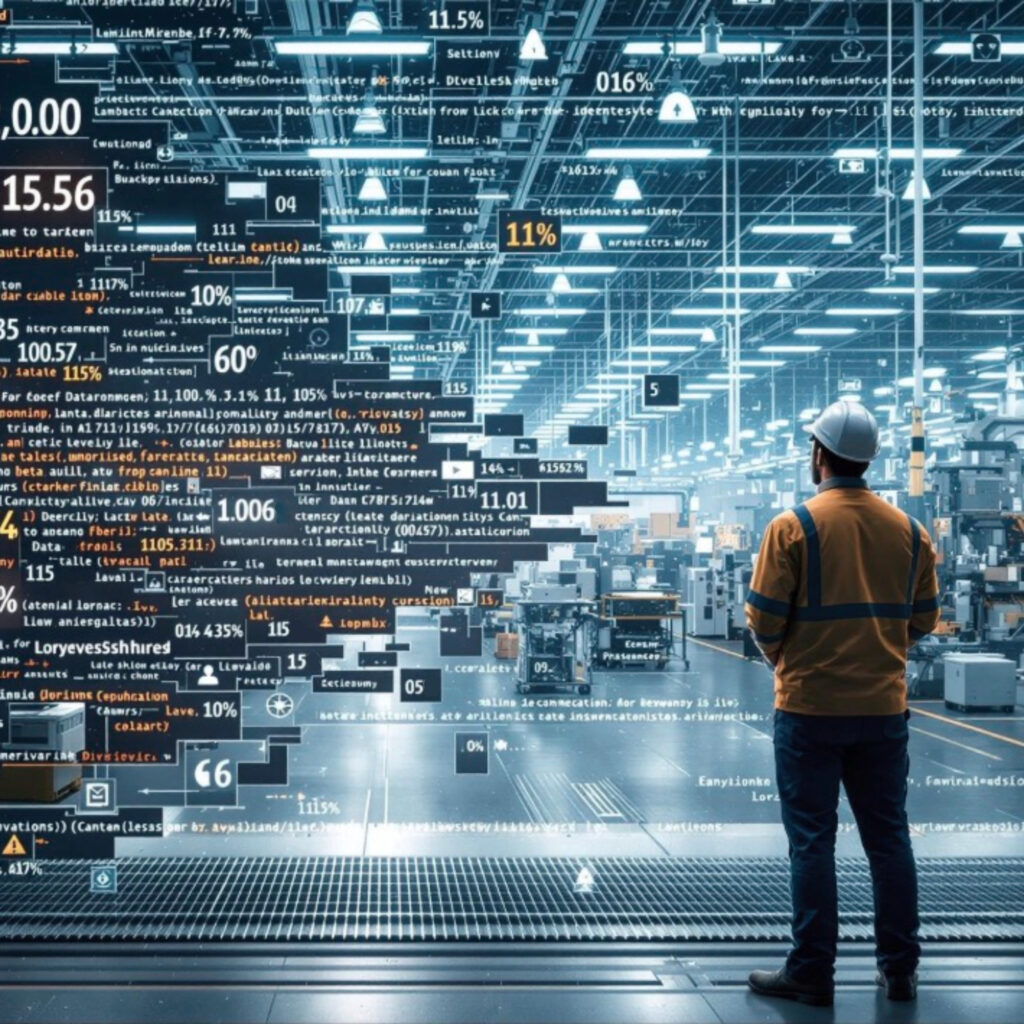
Manufacturnig worker confronted by a wall of corrupted data Manufacturing AI

Garbage In, Garbage Out: The Critical Importance of Data Strategy and Cleansing for Manufacturing AI Success

TL;DR: Successful manufacturing AI isn’t about “more data”; it’s about the right data, captured consistently and owned end-to-end. This piece lays out a practical data-quality strategy – prioritizing what to collect, standardizing and labeling at the source, closing feedback loops for retraining, and assigning clear ownership – so pilots turn into stable, scalable deployments.  The

Garbage In, Garbage Out: The Critical Importance of Data Strategy and Cleansing for Manufacturing AI Success Read More »

Ferrari driving on a gravel road. AI on the shop floor

Are Manufacturers Ready for AI on the Shop Floor or is AI in Manufacturing Like Driving a Ferrari on a Gravel Road?

TL;DR: Does AI on the shop floor fell less like a “Ferrari on the Autobahn” and more like a “sports car on a bumpy country road”? Maybe, but manufacturers can still move fast if they choose their path carefully. Common barriers like imperfect data, legacy infrastructure, workforce hesitation, and ROI uncertainty are real but manageable

Are Manufacturers Ready for AI on the Shop Floor or is AI in Manufacturing Like Driving a Ferrari on a Gravel Road? Read More »

Street sign reading Unplanned Downtime Just Ahead

Unplanned Downtime: The Hidden Costs and How AI Can Prevent It

TL;DR: Unplanned downtime quietly drains money, productivity, and customer trust. Traditional break/fix and fixed-interval preventive maintenance leave blind spots that still allow surprise failures and expensive emergency repairs. AI-driven predictive maintenance changes the game by combining cheap, widely deployed sensors with machine learning models that estimate equipment health and remaining useful life. With the right

Unplanned Downtime: The Hidden Costs and How AI Can Prevent It Read More »

Challenges of AI in manufacturing

Challenges of AI in Manufacturing – the Perspective of an Implementation Professional

TL;DR: Not all challenges of AI in manufacturing hit the same way. On the shop floor, quality data is usually plentiful, mature (non-GenAI) models are deterministic and production-ready, and on-prem deployments can control cyber risk. The real blockers: poor use-case fit, change management issues, and the build-vs-buy trap. This piece shares a practitioner’s view on

Challenges of AI in Manufacturing – the Perspective of an Implementation Professional Read More »

Tape measures overlayed with the words "standardization with AI" Standardization in visual inspection

AI: The Path to Standardization in Visual Inspection

TL;DR: Standardization in visual inspection is where AI shines.  AI models, once trained on diverse, well-labeled examples of good parts and defects, apply the same quality criteria every time: across shifts, lines, and even plants. Unlike human inspection, which varies with fatigue, experience, and interpretation, AI delivers consistent, repeatable calls and a clear audit trail.

AI: The Path to Standardization in Visual Inspection Read More »